Update Sep 18th, 2024: Tamron released a new firmware update that promises to improve AF tracking performance and add AF Assist compatibility!
 Tamron 18-300mm f3.5-6.3 Di III-A VC VXD
The Tamron 18-300mm f3.5-6.3 Di III-A VC VXD lens is arguably the most versatile and convenient one-lens solution for Sony E and Fujifilm X-mount APS-C cameras. I am also hopeful that Tamron will eventually release this lens for Nikon Z and Canon RF mount APS-C cameras. In December 2023, I rented this lens with my own money to use exclusively with a Sony A6700 during a 3-day trip to Colorado and New Mexico. Although it was a short trip, it gave me a good understanding of what the Tamron 18-300mm lens is capable of, and how it fits in a real-life scenario where practicality -such as no lens swapping and no heavy, bulky kit- is of utmost importance (It was also great to be back in Colorado after 20 years; my favorite state in the US!). Here, I want to share a written version of my findings, accompanied by some example photos.
 Sony A6700 + Tamron 18-300mm at 300mm, ISO 4000, 1/400sec, F6.3
Price
Before diving into the pros and cons, let's discuss the price. The 18-300mm lens has an MSRP of $699, and it often gets discounted to during sales events. Given what this lens offers and how many lenses it can technically replace, I believe it's reasonably priced.
 Sony A6700 + Tamron 18-300mm at 63mm, ISO 100, 1/160sec, F6.3
Build Quality and Controls
The lens is constructed from engineering plastic and features a metal mount, feeling solid in hand. I appreciate the smooth finish on the lens body. The included petal-shaped plastic lens hood is relatively small for a lens with a 300mm reach, but it was likely designed this way to prevent vignetting at the wide end.
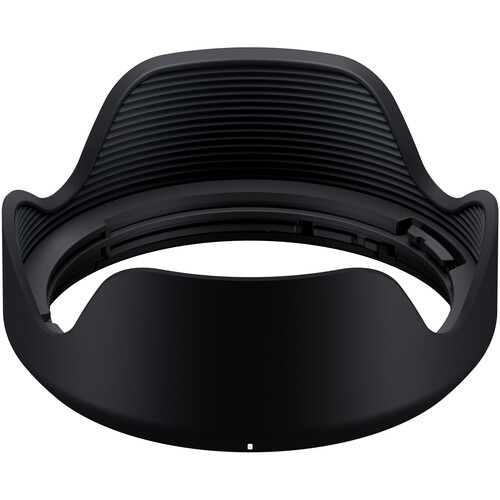 Tamron 18-300mm Lens Hood
This lens is weather-sealed against dust and moisture, including a gasket on the camera mount and additional gaskets throughout the body. I used the 18-300mm with a Sony A6700 under light rain without any issues.
 Sony A6700 + Tamron 18-300mm under light rain
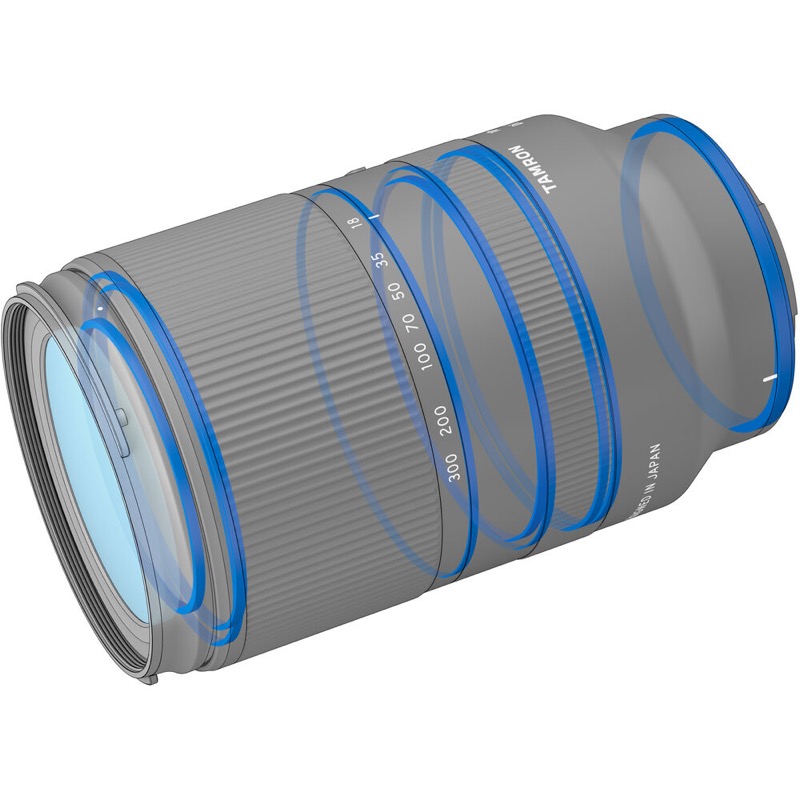 Weather Seals
The controls on this lens are straightforward, consisting of a zoom ring, focus ring, and zoom lock switch. It lacks switches for AF-MF, IS on/off, a focus hold button, an aperture ring, and other advanced features. Of these, the only feature I truly miss is the AF-MF switch.
 Sony A6700 + Tamron 18-300mm at 147mm, ISO 1250, 1/250sec, F6.3
Zoom Zoom!
 Tamron 18-300mm Fully Extended with the Lens Hood
The 18-300mm uses an external zoom design, meaning the length changes as you zoom. The zoom ring, positioned near the front of the lens, is large but feels somewhat tight. However, it requires less than a 90-degree rotation to adjust from 18mm to 300mm, which is highly practical in the field.
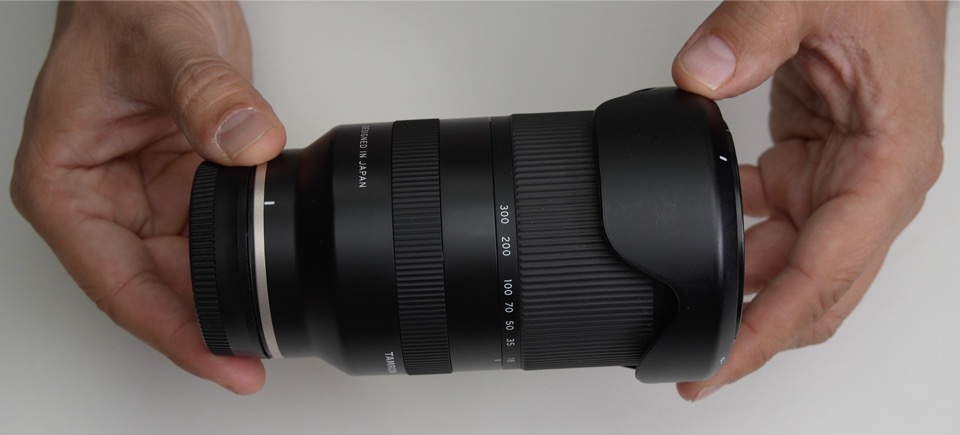 It is easy and quick to zoom from 18mm to 300mm with the Tamron
Here is a demonstration of how the frame appears at 18mm and 300mm, illustrating the impressive focal flexibility of this lens.
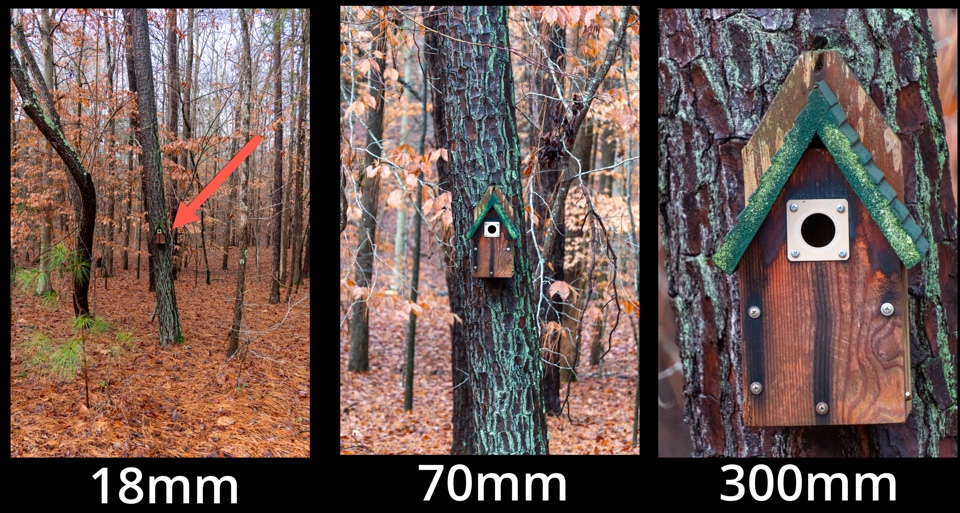 Focal Range Demonstration at 18mm, 70mm and 300mm
The focus ring, situated closer to the camera body, is narrower and easier to rotate. Manual focusing is done by wire, but it is responsive and accurate. Kudos to Tamron for incorporating its top-of-the-line linear focusing motor into this lens. Autofocus is fast, silent, and precise, a notable improvement over most older super zoom lenses from the DSLR era.
 Landscape with Sony A6700 + Tamron 18-300mm at 135mm, ISO 100, 1/320sec, F8
Aperture
Regarding the aperture, it is a variable aperture lens and this is how aperture changes with focal length approximately:
- 18mm to 22mm: F3.5
- 23mm to 38mm: F4
- 39mm to 53mm: F4.5
- 64mm to 87mm: F5.0
- 88mm to 157mm: F5.6
- 158mm to 300mm: F6.3
From 18 to 22mm, the lens at F3.5 is only 1/2 stop slower than the F2.8 lenses, easily usable at low-light. The telephoto end however is not ideal for low-light conditions due to rapidly slowing aperture, but is adequate for most outdoor photography scenarios.
Min Focusing Distance and Max Magification
A notable feature of this lens is the 0.5x maximum magnification at 18mm, though achieving this is challenging. The minimum focusing distance drops to 15cm, and as you may know, this distance is measured from the sensor plane, so the front element must nearly touch the subject to attain the promised 0.5x magnification. Under such conditions, the lens shadow obstructs the subject most of the time, even with specialized macro lighting.
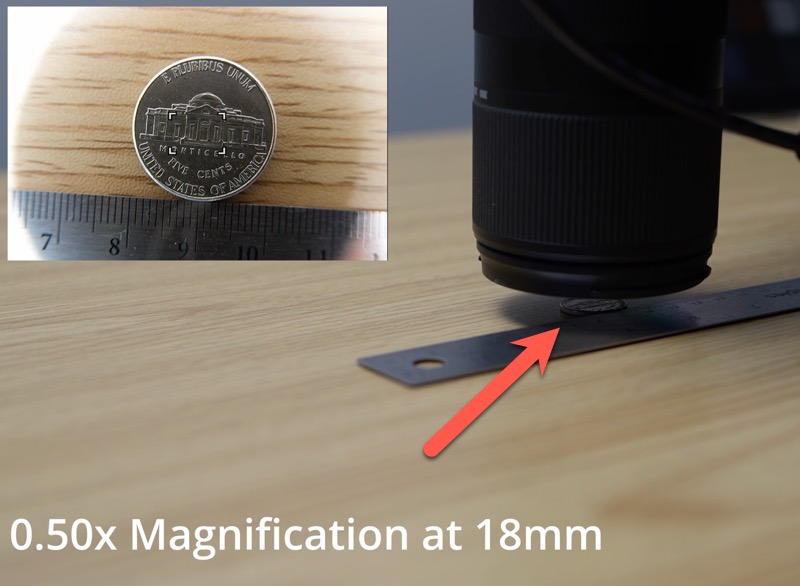 Close-up at 18mm - Lens front element almost touches the subject
Tamron highlights the macro capability of this lens on its product page, using a semi-transparent object (a sliced orange) lit from behind as an example. I think this is their way of acknowledging the limitations of the maximum magnification.
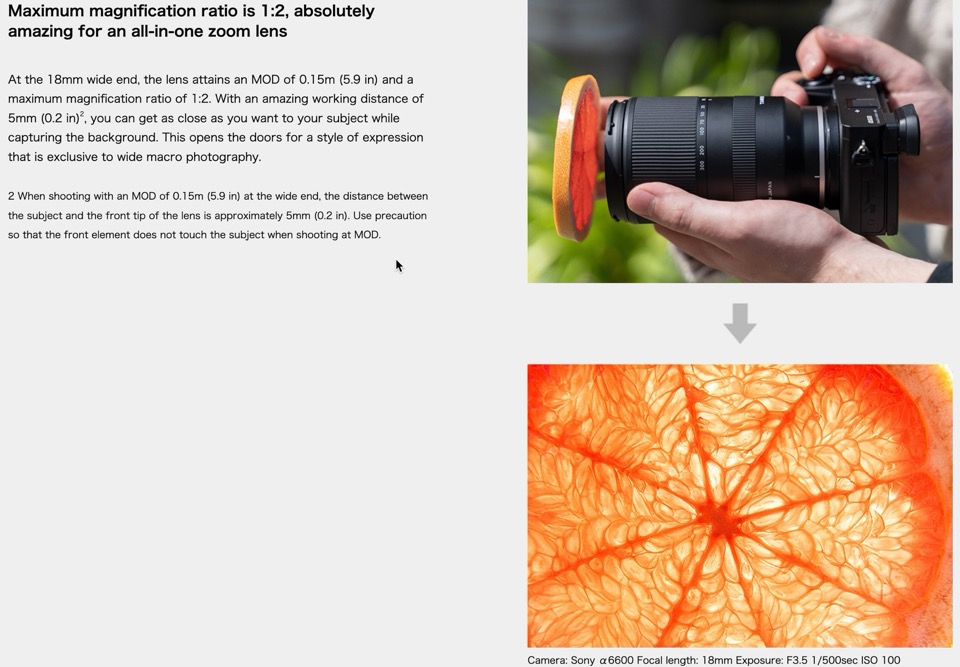 Tamron Official Product Page Image for Close-up Demonstration
Personally, I find the 0.25x magnification at the 300mm end more usable. It's lower but allows for a more comfortable distance from the subject, which is more practical in the field.
 0.25x Close-up at 300mm, ISO 3200, 1/500 sec, F6.3 -
Optical Stabilization
The 18-300mm features optical image stabilization, though no official CIPA rating for its effectiveness is available. When used with the Sony a6700, I achieved up to 4 stops of compensation at 300mm while shooting photos, which was impressive. However, the video results at 300mm were less smooth, possibly due to poor integration between the a6700's IBIS and the lens's optical stabilization. Nevertheless, the stabilization is extremely beneficial in the field, especially for cameras without built-in image stabilization.
 Wait, where did I park my sleigh? Sony A6700 + Tamron 18-300mm at 167mm, ISO 640, 1/320sec, F6.3
Size
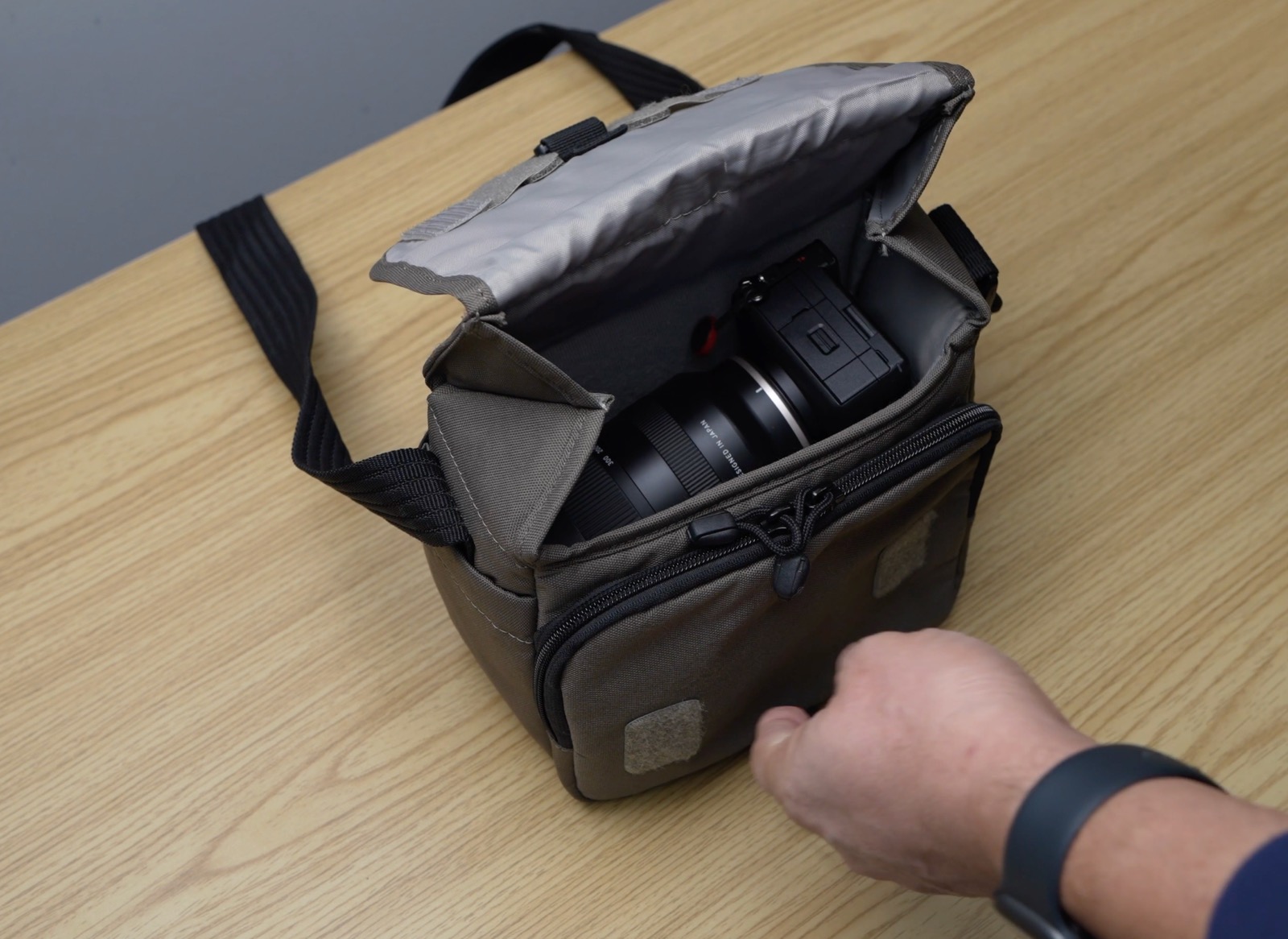 Tamron Lens with A6700 fits in a small camera bag easily
Size and portability is especially important for a lens that promises to be your one-lens solution that you can carry with you everywhere. The Tamron 18-300mm is neither small nor overly large, considering its extensive focal range. It fits easily into my small shoulder bag, making it highly portable. For context, its size is comparable to the Sony 70-350mm lens I previously reviewed. Below are some quick comparisons with other potential options in the E and X mounts.
Sony alternatives:
 Tamron 18-300mm vs Sony 70-350mm vs Sony 18-135mm Size
Fujifilm altenatives:
 Tamron 18-300mm vs XF 70-300mm vs Fujifilm 18-135mm Size
One minor grievance I have is with the size of the Tamron's rear lens cap, which is significantly larger than Sony's. It is not a big deal but I am not sure why Tamron designed it this way.
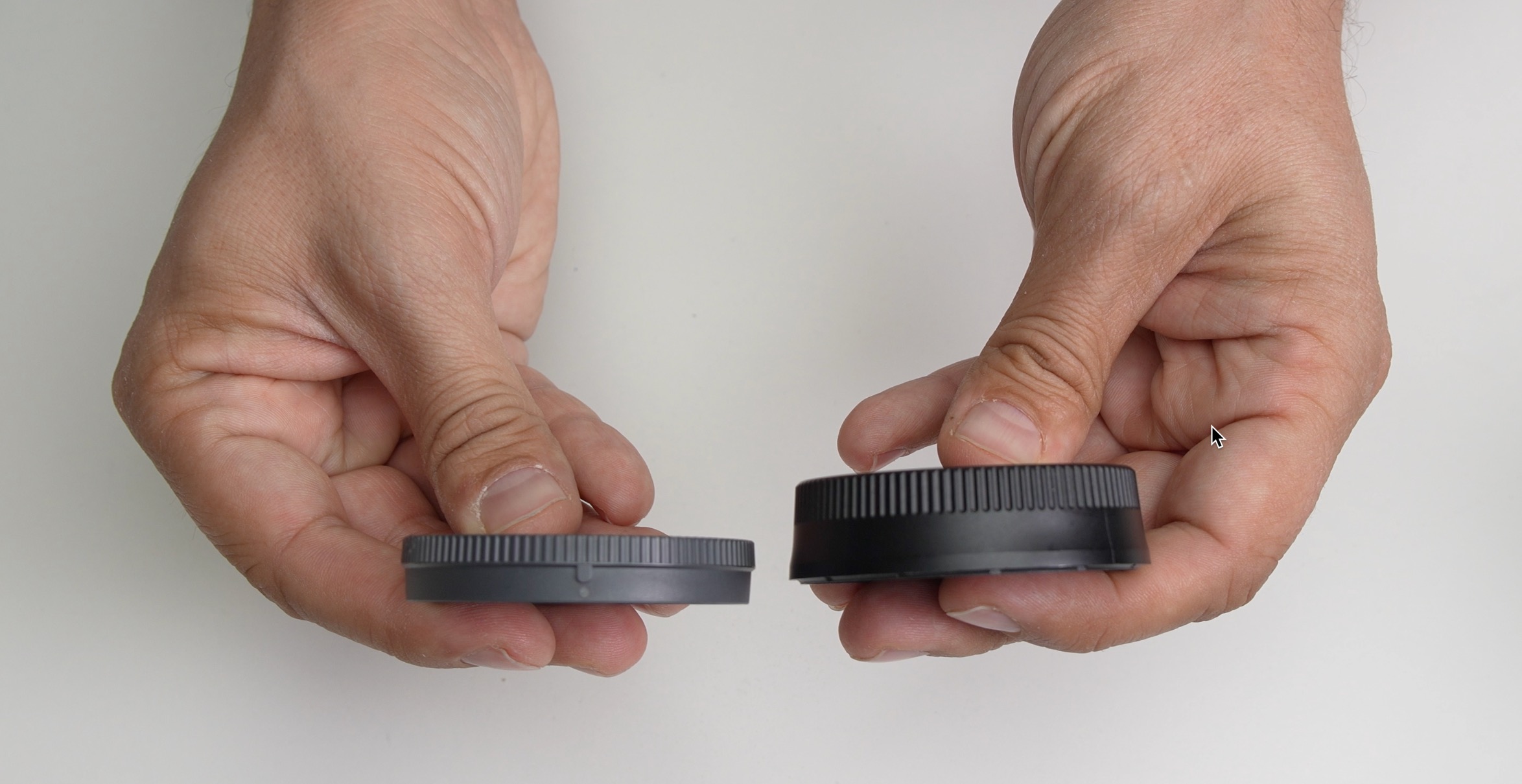 Tamron Lens cap much larger than the Sony counterpart
 Sony A6700 + Tamron 18-300mm at 300mm, ISO 5000, 1/500sec, F8
Image Quality
In terms of sharpness, this lens doesn't match the quality of modern prime lenses or faster, more expensive zoom lenses with lower zoom ratios, but it is very acceptable across all focal lengths. Given the complexity of its optical design, Tamron has done an excellent job. Additionally, one often overlooked advantage of super zoom lenses is their ability to offer extreme framing flexibility. This means you typically won't need to crop much in post-processing, unlike with shorter zoom or prime lenses, so the image degradatio due to cropping can be held minimal.
 Sony A6700 + Tamron 18-300mm at 80mm, ISO 100, 1/500sec, F8
At 18mm, there is noticeable barrel distortion and vignetting, and these are expected from a lens with such a large zoom range, but these issues are effectively corrected by the lens profiles. I haven't had any issues with these artifacts in the final results as long as I don't turn off the auto corrections on Lightroom.
The lens features a 7-blade rounded diaphragm. While the bokeh isn't exceptionally smooth and may exhibit some weird effects especially when the background is busy, it is acceptable overall, especially for a super zoom lens with a slow f3.5-6.3 aperture.
 Sony A6700 + Tamron 18-300mm at 2000mm, ISO 100, 1/500sec, F8 - Enhanced in Adobe Lightroom Classic
What kind of photography is it good for?
The Tamron 18-300mm has an extremely versatile zoom range (27mm to 450mm full-frame equivalent on an APS-C camera), starting from wideangle to all the way to Super-telephoto territory while offering a decent image quality at almost all focal lengths which make it ideal for:
- Travel photography
- Street photography
- Close-ups
- 'Light' wildlife
- Outdoor sports under good light
- Landscapes (need to stop down though for max resolution)
Conversely, it is less suited for any situation where fast aperture, bokeh and sharpness are paramount, such as:
- Indoor Events
- Indoor Sports
- Weddings
- Architectural & Real Estate photography
Conclusion
Carrying a single lens during a three-day trip was a departure from my usual practice, as I typically pack multiple lenses and cameras due to the fear of missing important shots. However, the Tamron 18-300mm alleviated my concerns. I felt like I rarely missed a shot due to inadequate focal coverage, and the convenience of carrying just one lens throughout the trip was a significant relief both physically and mentally. The simplicity of not having to change lenses in the field added greatly to my comfort.
 Sony A6700 + Tamron 18-300mm at 300mm, ISO 640, 1/500sec, F8
I highly recommend this lens to anyone with a Sony or Fujifilm APS-C camera seeking a minimal setup that covers most essential focal ranges without breaking the bank. It's easy to carry around, too. For enhanced versatility, consider adding a fast standard prime lens, such as a 30mm F1.4 or 50mm F1.8, for low-light situations and portraits. With this combination, you'll have a superb setup that will serve you well for a long time.
 Is that a Nikon? Sony A6700 + Tamron 18-300mm at 193mm, ISO 320, 1/200sec, F5.6
Here are the pros and cons of this lens that I came up with during my short trip:
Pros
- Extremely useful 16.7x zoom
- Good image quality across the focal range
- Fast, precise, and silent autofocus
- Effective optical image stabilization
- Short throw zoom ring
- Extensive weather sealing
- Solid build quality
- Low chromatic aberrations
Cons
- Difficult to achieve maximum magnification at 18mm
- Relatively poor sharpness at the telephoto end compared to the wide end.
- No AF/MF switch
You can support us by purchasing this lens or any other equipment using the links below ( with no additional cost to you):
Check the Price and Availability of the Tamron 18-300mm f3.5-6.3 Di III-A VC VXD at: B&H Photo / AmazonUS / AmazonCA / AmazonDE / AmazonES / AmazonFR / AmazonIT / AmazonUK / AmazonIN / AmazonAU
More Sample Images
 Sony A6700 + Tamron 18-300mm at 56mm, ISO 100, 1/160sec, F6.3
 Sony A6700 + Tamron 18-300mm at 41mm, ISO 100, 1/200sec, F9
