When Sony dropped the new FX5 cinema camera, it grabbed pretty much all the headlines, and fair enough. But Sony also quietly launched two accessories alongside it that don't get talked about in much detail, and honestly they're a big part of what makes the FX5 a serious tool. The DVF-EL1 electronic viewfinder and the XLR-H2 XLR handle unit both plug into the camera and expand what you can actually do with it on a shoot. Let's give them the attention they deserve.
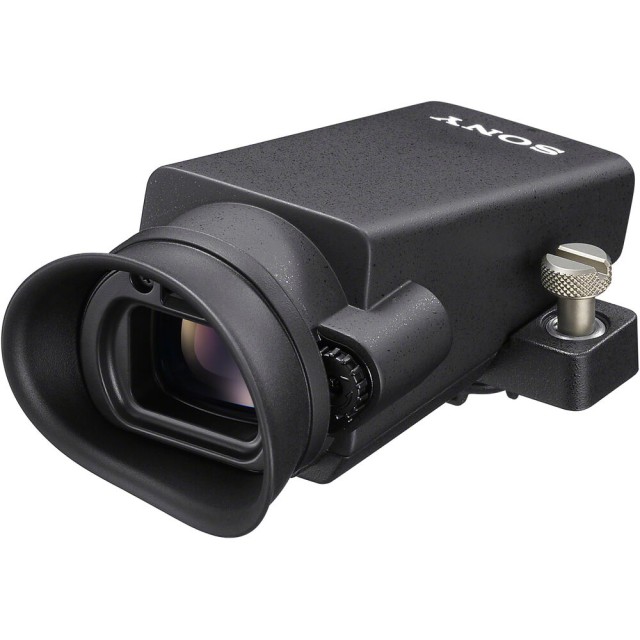 Sony DVF-EL1 Electronic Viewfinder
Sony DVF-EL1 Electronic Viewfinder
The FX5, like most of Sony's Cinema Line bodies, leans on its rear LCD for monitoring. That's fine indoors, but step out into bright daylight and a rear screen washes out fast. The DVF-EL1 is a dedicated eye-level viewfinder that fixes exactly that. It's a 0.58 inch, 7.08 million dot OLED panel with 0.90x magnification, so you press your eye to it and get a clean, glare-free view no matter how harsh the sun is.
As someone who shoots a lot of Sony out in the field, this is the accessory I'd grab first. Beyond killing glare, an EVF pressed to your face gives you a third point of contact and steadies the camera for handheld work, which matters when you're tracking movement. It also makes nailing critical focus way easier than squinting at a reflective LCD.
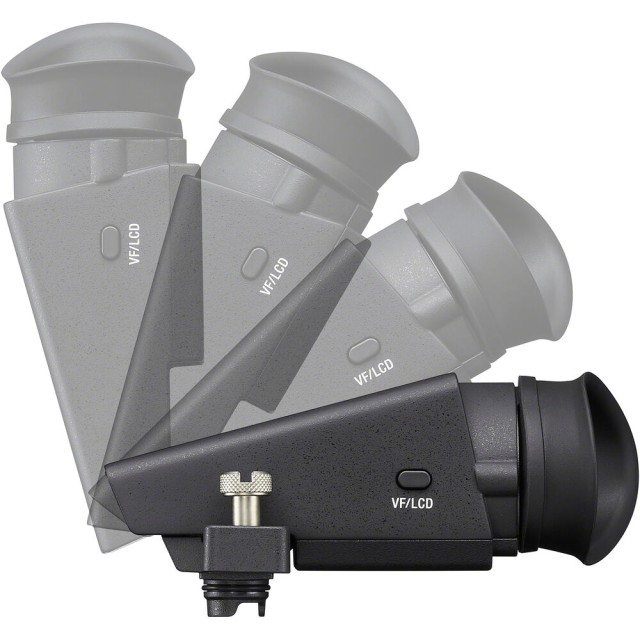 Sony DVF-EL1 Tilting Angles
A few details worth knowing:
- Wide color gamut equivalent to DCI-P3 with 10-bit color, plus HDR monitoring, so what you see is an accurate read on color and exposure
- Two view modes, Standard and Zoom Out, with Zoom Out giving you better overall visibility of the frame
- Tilts upward from 0 to 90 degrees, which is a lifesaver for low-angle setups
- The eyepiece cup detaches and reverses for left-eyed or right-eyed shooting, and pulling it off entirely lets glasses wearers get in closer
- Diopter adjustment from -4.0 to +3.0
- It mounts to a proprietary port on top of the camera and locks down with two 1/4 inch 20 screws, so no wobble
- Light at just 3.4 oz, so it barely adds to the rig
It runs $698 and is set to ship around mid-August.
Sony XLR-H2 XLR Handle Unit
This one is doing double duty, and that's what makes it so useful. It's a top handle and a pro audio interface in a single piece. On the audio side, it adds two combo XLR and 1/4 inch inputs plus a 3.5mm mic input, and it records at up to 96 kHz sampling with 32-bit float.
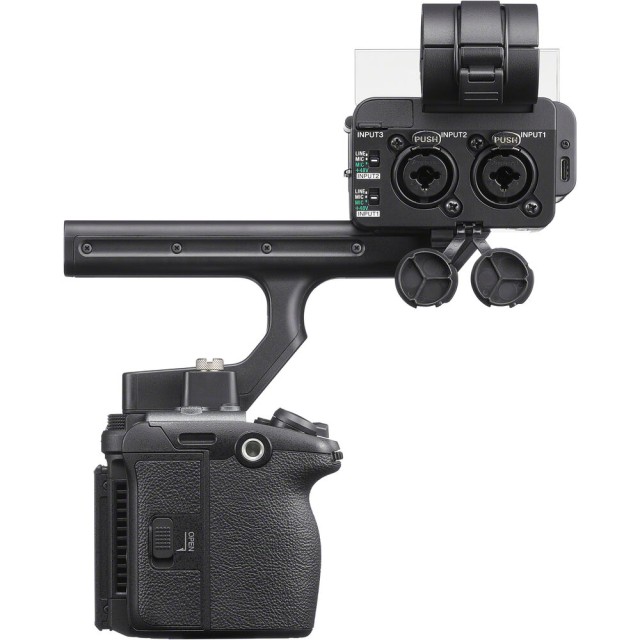 Sony XLR-H2 XLR Handle Unit with the FX5
If you haven't worked with 32-bit float audio yet, this is the headline. In practical terms it means you basically can't clip your audio. You can set levels loosely and still recover a shout or a sudden loud moment in post without distortion. For run-and-gun work, interviews, and documentary shooting where you can't babysit levels every second, that's a genuine game changer.
What makes it clever:
- Connects through the Multi Interface Shoe for a cable-free digital audio path, so no dangling cables and no analog noise sneaking in
- Dual ADCs and four-channel input give you room to run multiple sources at once
- It can save separate WAV files in-camera, which speeds up editing since your audio is already split out and ready to drop into a timeline
- Physical dials and controls sit on the side under protective covers, so you won't knock your levels out of whack mid-take
- The handle itself makes high and low angle shooting far more comfortable and adds four 1/4 inch 20 threads for mounting monitors, lights, or whatever else
- There's an integrated microphone holder built in too
- It's powered by the camera, so no separate battery to manage
The XLR-H2 comes in at $798 and ships around the same mid-August window.
 FX5 in use - Image Credit Sony
So Are They Worth It?
The FX5 is plenty capable on its own, but these two accessories are what turn it into a complete pro rig. The DVF-EL1 gives you accurate eye-level monitoring for shooting outdoors and nailing focus, and the XLR-H2 brings broadcast-grade audio plus much better ergonomics. If you're buying an FX5 for real paid work, I'd budget for both from day one rather than treating them as maybe-later add-ons. They're the difference between a great sensor and a great camera you can actually run all day.
Want the full picture on the body itself? Check out our Sony FX5 review.
