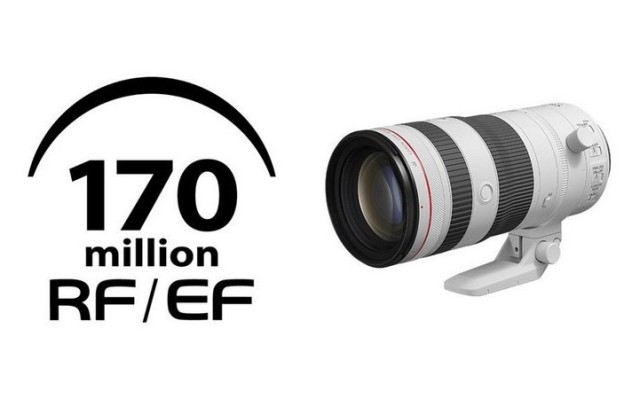
 Canon Hits 170 Million Interchangeable Lenses
Canon is celebrating a big round number: 170 million interchangeable lenses produced across its EF and RF families as of October 2025 (They hit the 100million mark back in 2014). If you’ve shot Canon at any point since the EOS era began, you’ve helped write this stat. Canon also says this extends its world record for the most interchangeable camera lenses ever produced.
 The RF 70-200mm F2.8 L IS USM Z was the 170 millionth unit off the line
The headline numbers
- 170,000,000 total RF + EF lenses manufactured (cumulative, October 2025)
- 108 lens models in the combined RF/EF lineup (includes extenders; availability varies by market)
- 10-1200mm (RF 10-20mm F4 L IS STM to RF 1200mm F8L IS USM) focal-length coverage across the family, and 5.2mm if you include VR lenses ( RF 5.2mm f2.8 L Dual Fisheye 3D VR)
- #1 global ILC market share for 22 straight years (2003–2024)
- The 170 millionth unit off the line was the RF 70-200mm F2.8 L IS USM Z (the power-zoom-compatible “Z” version)
Also Read: Canon RF Hybrid Lenses Every Video Shooter Should Know
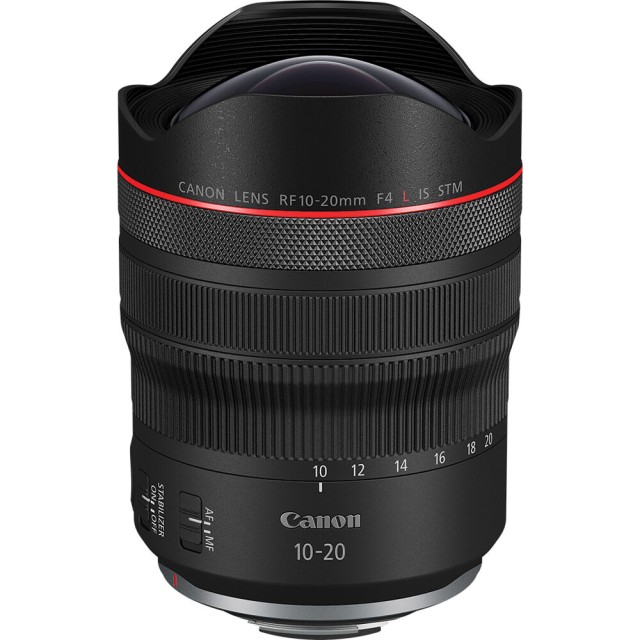 Canon RF 10-20mm f4 L IS STM is the widest RF mount rectilinear lens
A quick walk through history
- 1987: EF mount launches alongside EOS film SLRs. Early milestones include USM autofocus motors, IS (image stabilization), and DO (diffractive optics) lenses.
- 2018: RF mount arrives with EOS R, bringing a shorter flange distance, faster communications, and a wave of modern designs.
- 2021–2025: Push into specialty and hybrid video with the EOS VR system and Z-series power-zoom-ready RF lenses (like RF 24-105mm F2.8 L IS USM Z and RF 70-200mm F2.8 L IS USM Z), plus a standard F1.4 L hybrid prime series capped recently by the RF 85mm f1.4 L VCM.
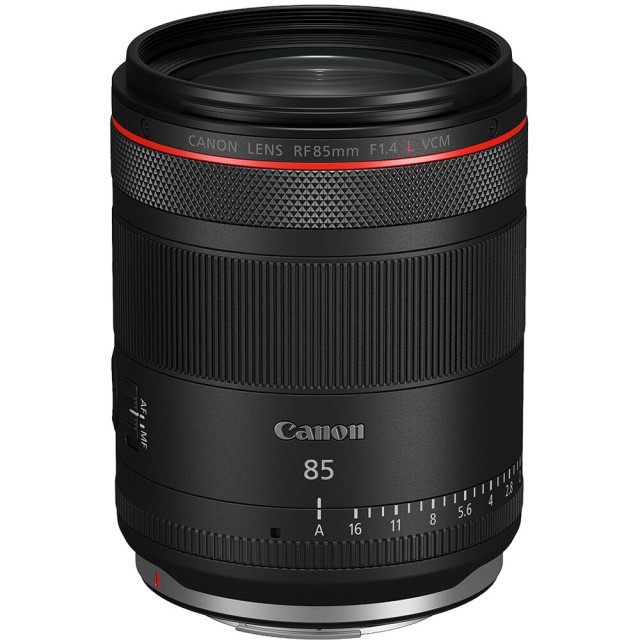 Canon RF 85mm f1.4 L VCM is the latest Hybrid Series Lens in RF mount
Where Canon builds all this glass
Production started at Utsunomiya in Japan and now spans five sites: Utsunomiya (Japan), Taiwan, Malaysia, Oita (Japan), and Miyazaki (Japan). Milestones on the way: 10M in 1995, 50M in 2009, 100M in 2014, and now 170M in 2025.
