 Sony FE 200-600 F5.6-6.3 G OSS
Sony FE 200-600mm F5.6-6.3 G OSS Hands-on Review
(This is a blog post version of the Video review of Sony FE 200-600mm that I have published recently)
Initially launched in January 2019, the Sony FE 200-600 F5.6-6.3 G OSS is a super telephoto lens designed for Sony E-mount cameras. It covers full frame sensors and has an effective focal range of 300-900mm when used with APS-C cameras, such as the Sony Alpha a6700. The FE 200-600 is the most popular wildlife and birding lens for the E-mount. Thanks to its excellent image quality, it's attractive set of features and relatively affordable price tag of sub-2000 US dollars. I have had ample opportunity to conduct extensive tests on this lens using the A7R, A6700, and A6400 cameras. Here are my findings:
 Sony FE 200-600 F5.6-6.3 G OSS with Sony A6700
Size Matters
The Sony 200-600mm is a large lens without a doubt. Sony chose to make this lens an internal zoom type, which means that the length of the lens doesn't change during zoom. Here you can see how the Sony 200-600mm compares to Sigma 60-600mm. Even though the Sigma gets longer than the Sony one fully extended, it's slightly shorter when it's zoomed out.
 Sony FE 200-600 vs Sigma 60-600 E-mount
By the way, if you prefer watching instead of reading, here we have the original video review of this lens:
I personally prefer the internal zoom design over the extending zoom, since storage space is not an issue for me in general. But I understand some people will prefer the opposite due to its size advantage. At 2.1kg or 4.6 pounds, the 200-600mm is not a lightweight lens for sure, but I find it hand holdable for long shooting sessions.
 Sony FE 200-600 Weight
However, I feel the 200-600mm balances much better with heavier cameras, such as the A7R Mark V, when handholding, compared to smaller and lighter APS-C cameras. One possible option is adding a vertical grip to your camera. This will improve your grip when hand holding this lens.
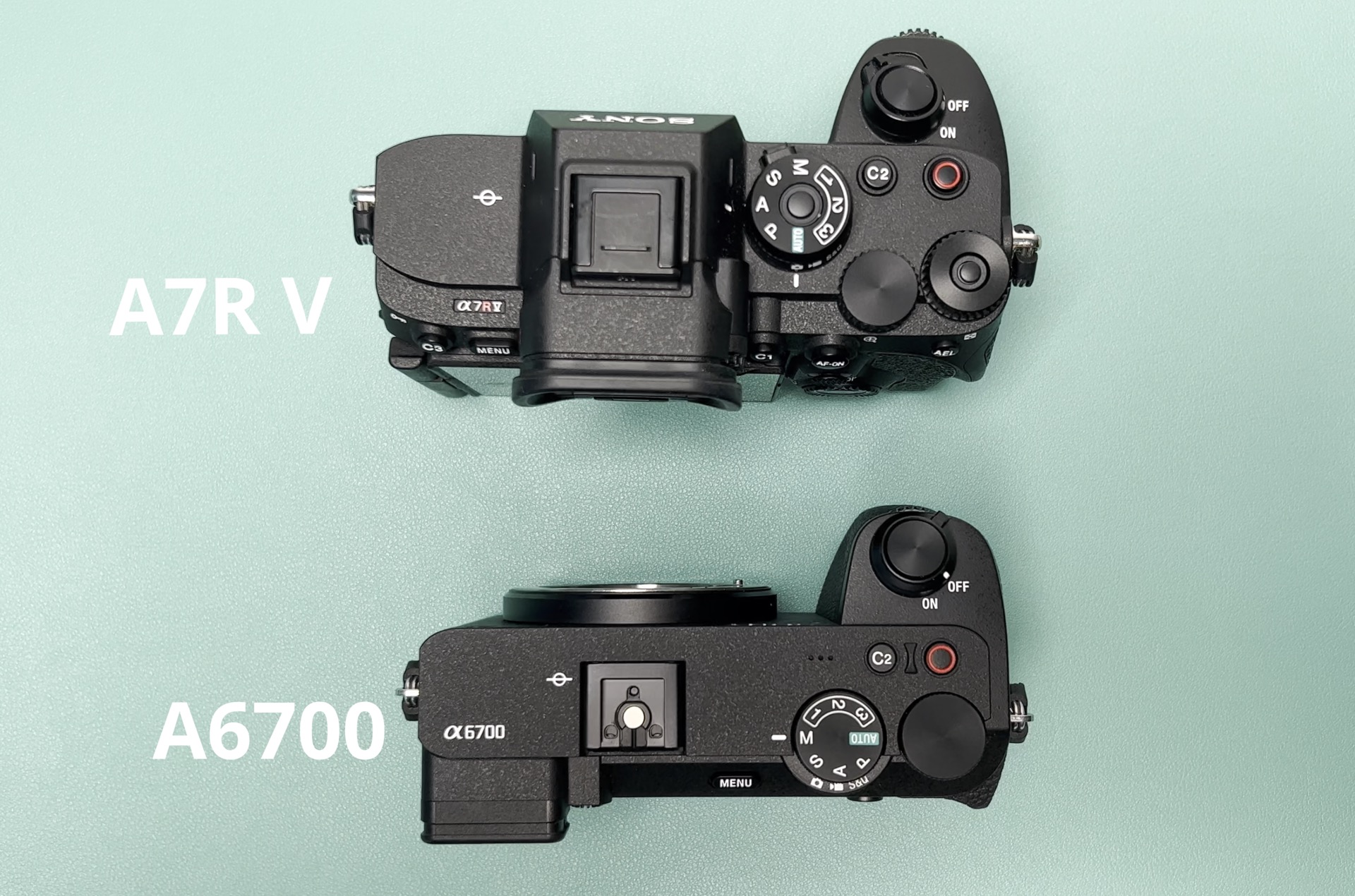 Sony A7R V vs A6700
Tripod Collar
As with almost all heavy and long lenses, the 200-600mm comes with a tripod collar, and it's the preferred point to attach this lens to a tripod or monopod. The lens foot of the collar is unfortunately not an Arca Swiss type. If we have this type of tripod heads, there are two options. First one is to attach an Arca Swiss type plate to this foot, as seen here, which adds a bit of weight but works. We just have to make sure it's tightly fixed, so it doesn't get loose and wobbly in time.
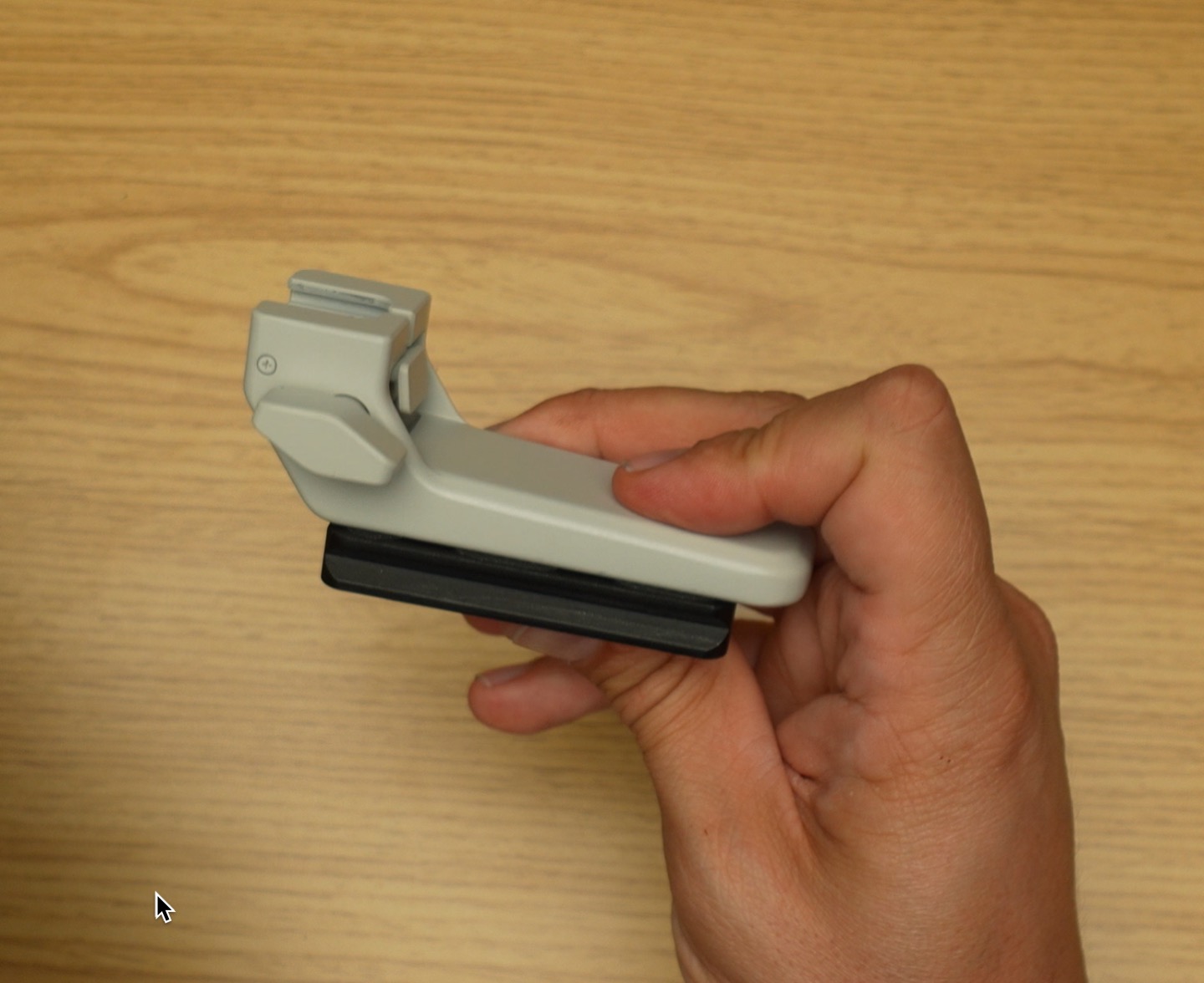 Sony FE 200-600 Tripod foot
The other option, which I chose to do, is to replace the original foot with an Arca Swiss type third-party one, like the Kirk replacement foot that you see here. At $100, it's not a very cost-effective solution, but I find it more reliable than the first option.
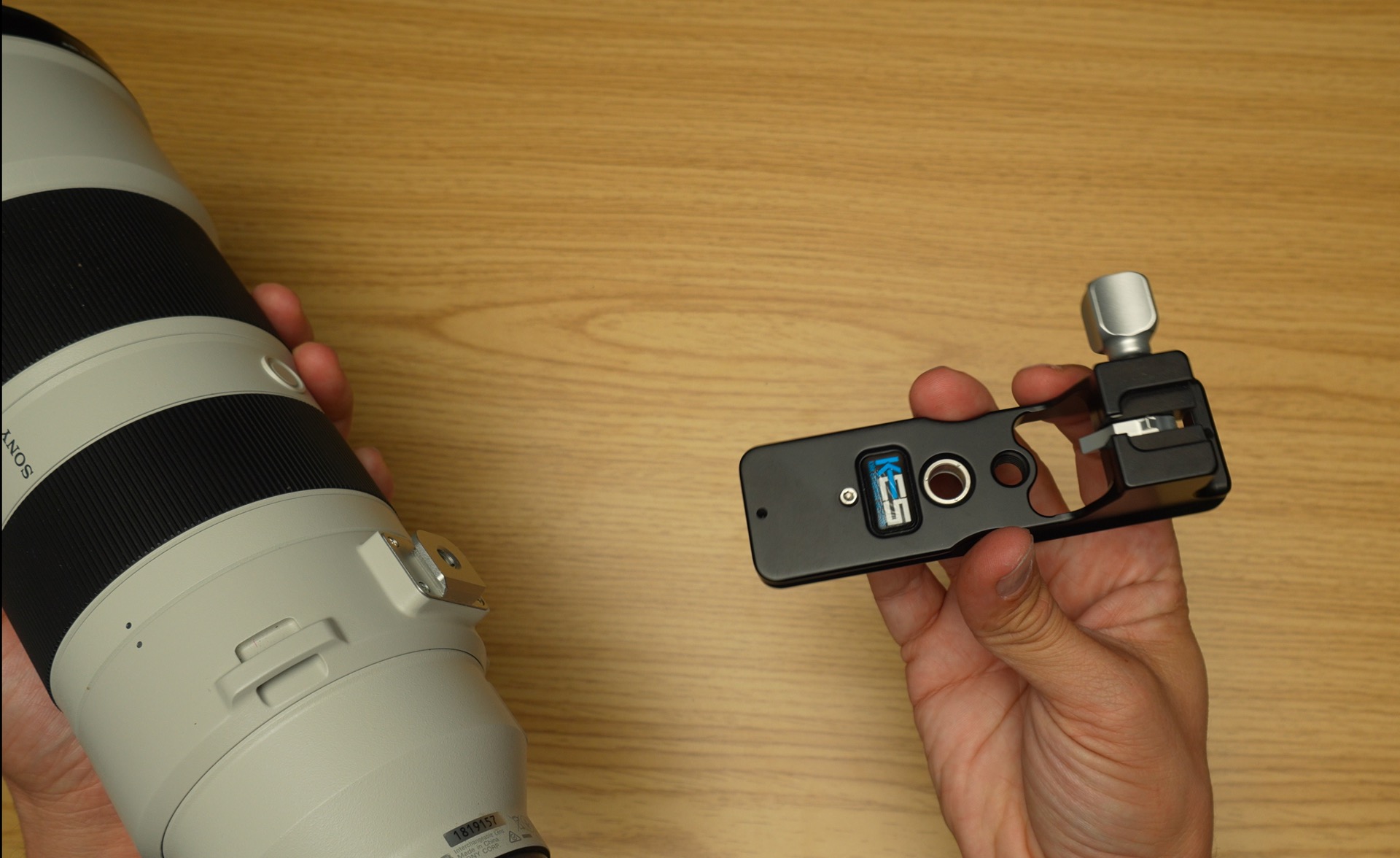 Kirk Replacement Foot for Sony 200-600mm
There's at least one bright spot regarding the tripod collar of the 200-600mm though. The lens foot can be easily replaced without the need for any special tool. However, the collar itself can't be removed. Here's another area where Sony can improve its tripod collar design. There are no clicks on 90 degree intervals when you rotate the lens from the collar. Some alternatives, such as the Sigma 60-600mm have this feature, which makes it much easier to align to a vertical or horizontal position without the need for fine adjustments.
 Tripod Collar - No clicking on Vertical or Horizontal Alignment Points
There are also eyelets on the tripod collar, which you can use to connect your strap, instead of connecting directly to your camera body.
Zoom and Focus Rings
Alright, enough about the tripod collar. Now let's move to the other features of the 200-600mm lens. One of the things that I like the most about this lens is its zoom ring. The zoom ring is large and easy to rotate, but what makes a difference is the very short throw ring rotation. It just takes 62 degrees of rotation to go from 200-600mm to zoom all the way in and out.
 Zoom ring has a short throw to go from 200 to 600mm
This is really useful in the field for small targets like birds, where you zoom out to find your target first and then zoom in to get better details. You can do this very fast without putting your wrist into weird positions. The zoom ring doesn't get fully blocked when the lens foot is reversed, which is nice if you shoot this way very often. The focus ring is closer to the camera body and easily accessible. It's also large and well-damped, so I have no complaints with it.
Lens Hood
The lens hood is made of plastic, which makes it light but still durable enough. The hood can be reversed for storage. Since it doesn't block the zoom or focus rings in this position, sometimes I just use it reversed when I need to quickly take it off the camera bag and shoot. The hood doesn't have a window, so using a circular polarizer with the lens hood on is tricky. You don't have much else to say other than to warn you not to lose it, as the replacement costs 75 US dollars.
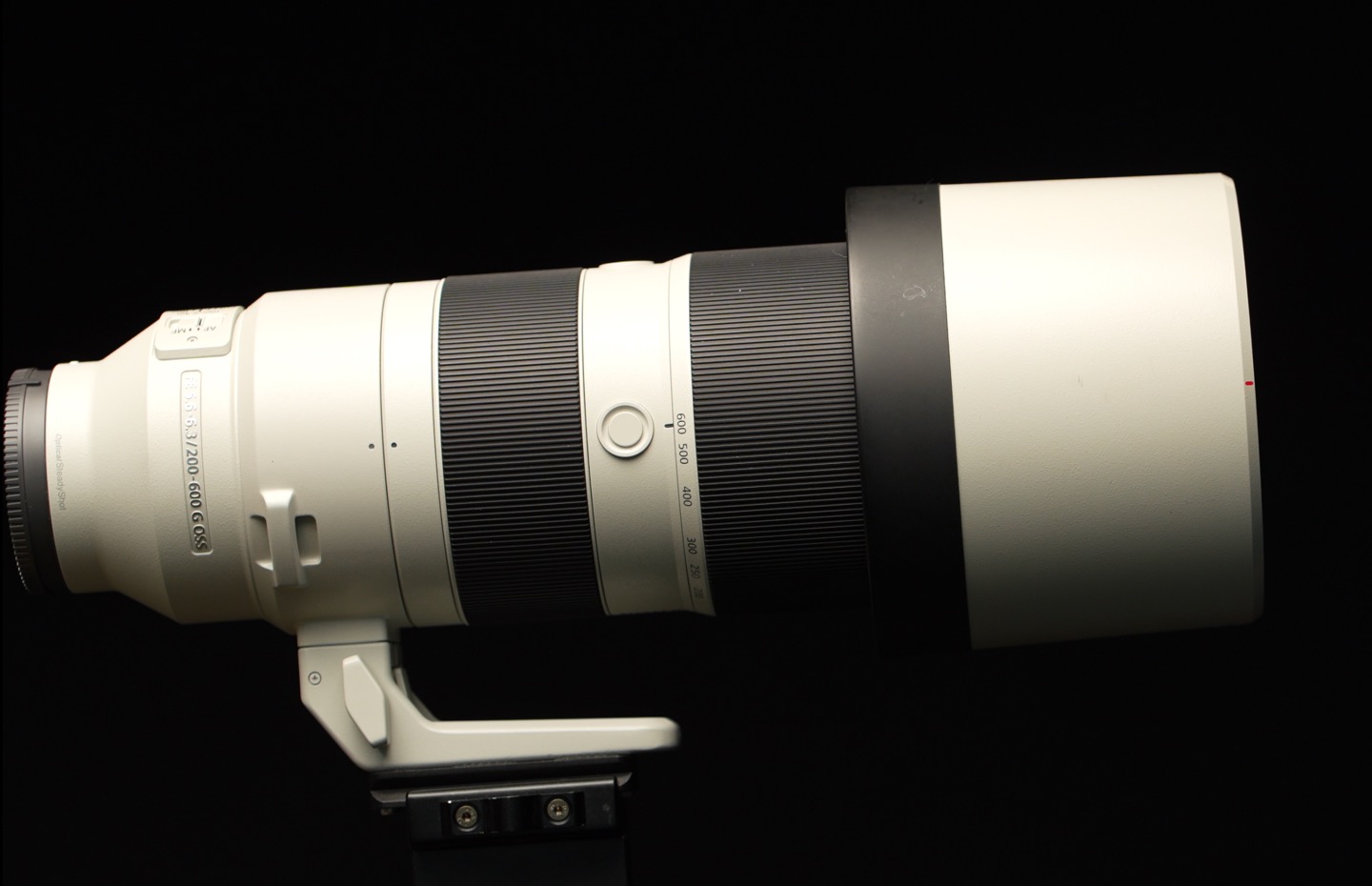 Lens Hood reversed
FIlter Thread
The 200-600 has a filter thread of 95mm, and there is no option to use drop-in filters, like some more expensive super telephoto lenses offer. Beware that 95mm filters can get really expensive.
Weather Sealing
The 200-600mm has an extensive weather ceiling throughout its body, as can be seen on this picture. Due to its internal zoom design, there are no external moving parts and gaps, so this helps further seal the lens against water and dust. I have used the lens in the rain without any problems. I believe the weakest link under such environments will most probably be your camera body, rather than the 200-600 lens itself.
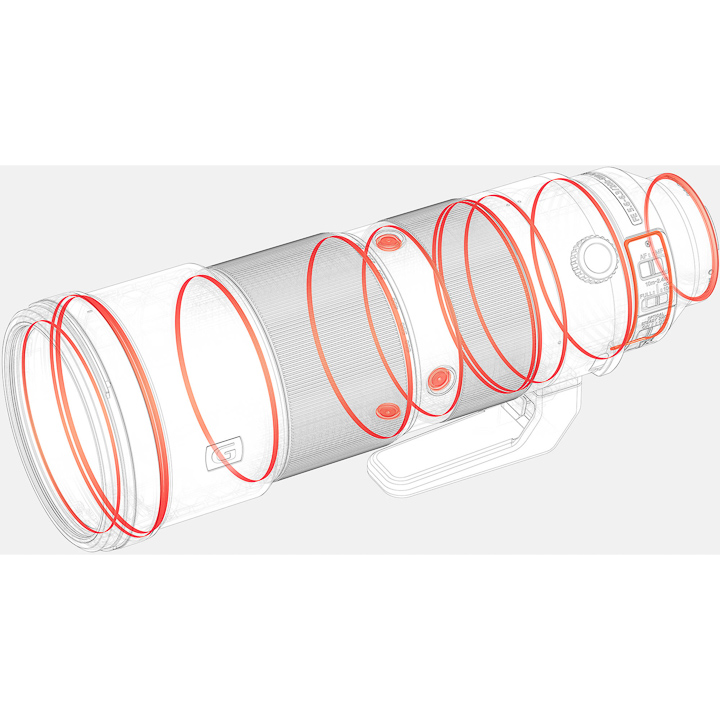 Weather Sealings
Controls on the body
There are four selection switches on the lens body. The first one is the AF-MF selection switch, which comes very handy to change between these modes without going into camera menus. The second one is the focus range limit selection, which has three options. Full range, 2.4 meters to 10 meters, and 10 meters to infinity.
 Lens Switches
The third switch is an optical steady-shot on and off button and it's self-explanatory. Sony recommends turning off the stabilization when on a tripod, so this switch provides a fast way to turn it on and off without delving into menus. The fourth switch selects one of the three stabilization modes. Mode 1 is standard, mode 2 is for panning, and mode 3 is for shooting fast and irregularly moving subjects, such as birds in flight or a soccer game. I generally keep it in mode 3 as I mostly shoot small birds with this lens, but I recommend you to try all modes to find which one works best for you. In addition to these four switches, there are three focus hot buttons located on the lens and they are customizable via the camera, although you can only assign the same function to all the buttons.
 Stabilization Modes
Image Stabilization
The optical image stabilization system on the 200-600 works well and comes quite handy, especially with camera buddies such as the a6400 that don't have any built-in sensor-based image stabilization. When paired with a camera buddy with IBIS, the optical stabilization of the lens works seamlessly and the total compensation gets even better. I am especially happy with this stabilization performance when paired with the Sony a7R5. The a7R5 has the best IBIS among Sony cameras and rated effective up to 8 stops.
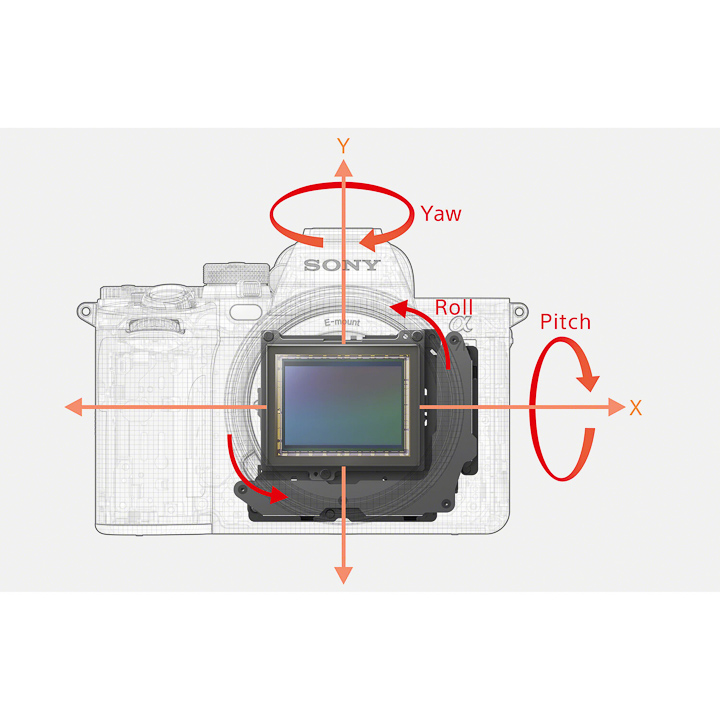 A7R V has the best IBIS in Sony world
Aperture
The 200-600 is not a fast lens. The aperture stays at 5.6 only between 200-300mm, and the rest of the focal range is f6.3. You will need to crank up the ISO higher compared to constant f4 lenses such as the Sony FE600mm in order to get the same shutter speed.
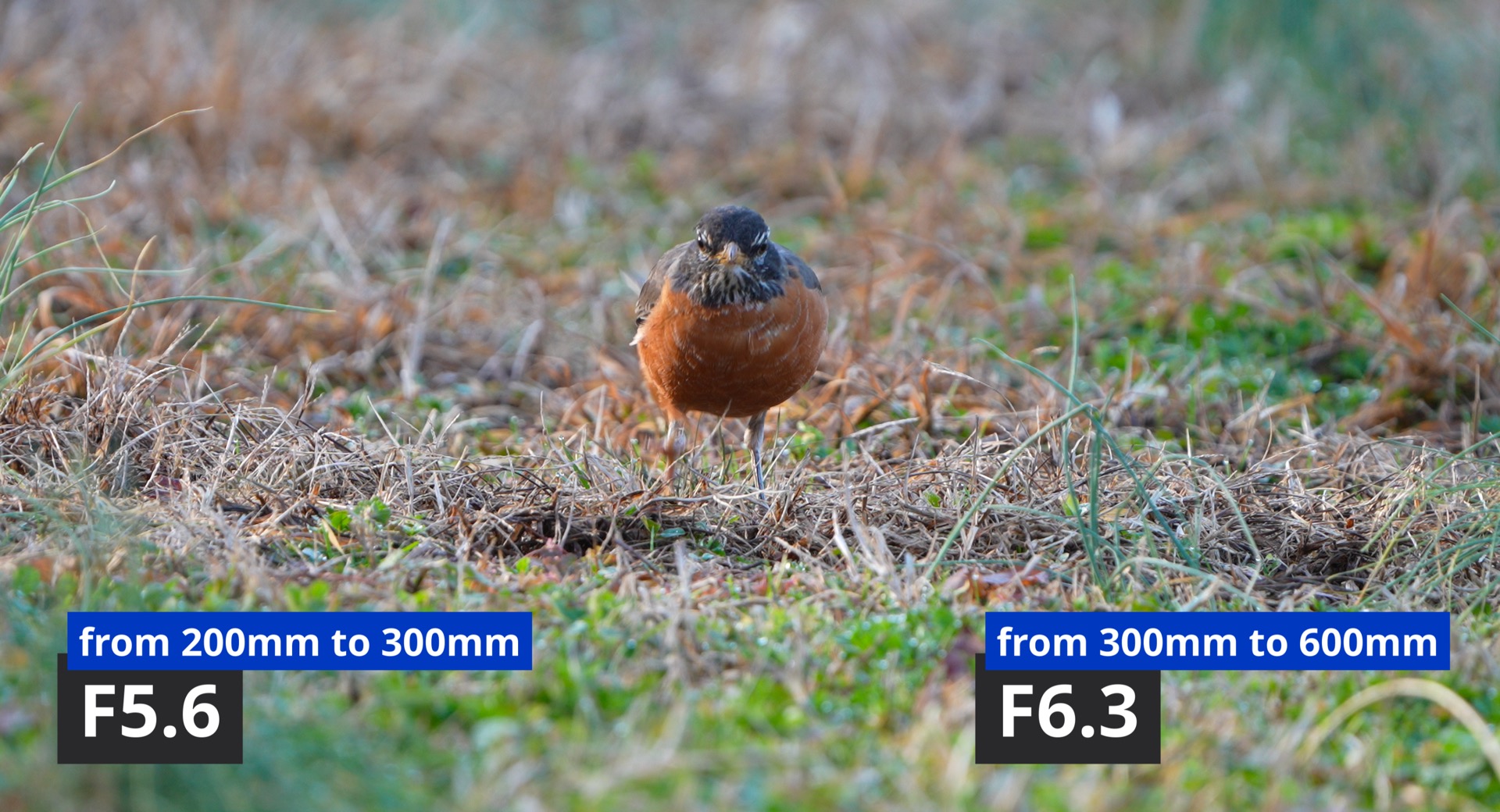 Aperture and Focal Length Relation for Sony 200-600
But this is perfectly acceptable considering the 600mm f4 weighs over 3kg and costs 13,000 US dollars.
 Sony 200-600 vs Sony FE 600mm F4
Use with Teleconverters
The 200-600 is compatible with Sony's 1.4x and 2x extenders. The 1.4x extender brings the effective focal range of this lens to 280-840mm on full-frame cameras and 420-1260 mm on APS-C cameras. When you attach the 2x extender, the effective focal range of the combination becomes 400-1200 on full-frame cameras and 600-1600 mm on APS-C cameras.
Sony FE 200-600 F5.6-6.3 G OSS Focal Range and Aperture Change with Teleconverter
 Sony 200-600mm with TC 1.4x Extender
I have shot this lens with the 1.4x extender both on full-frame and APS-C Sony cameras extensively, and I have to say the results are really good except under low-light situations.
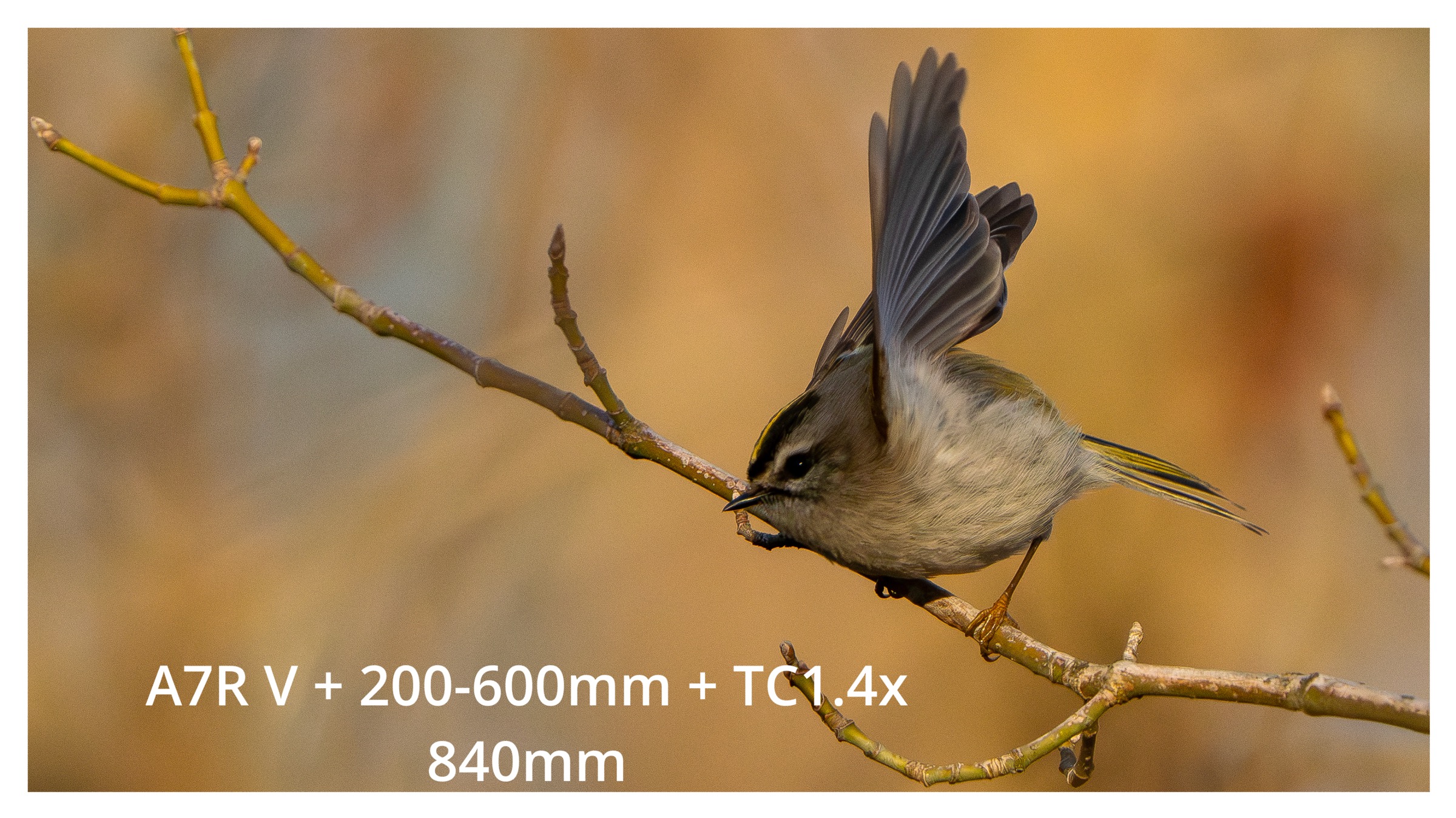 Sony 200-600mm with TC 1.4x Extender + A7R V
 Sony 200-600mm with TC 1.4x Extender + A6700
Focus System
Sony's direct drive supersonic wave motor focus system performs very well on this lens.
 Sony 200-600mm Focus System
The focusing performance and accuracy of the 200-600 manage to impress me even in toughest conditions. The focus speed is as fast as it can get for a variable aperture lens with tons of glass elements.
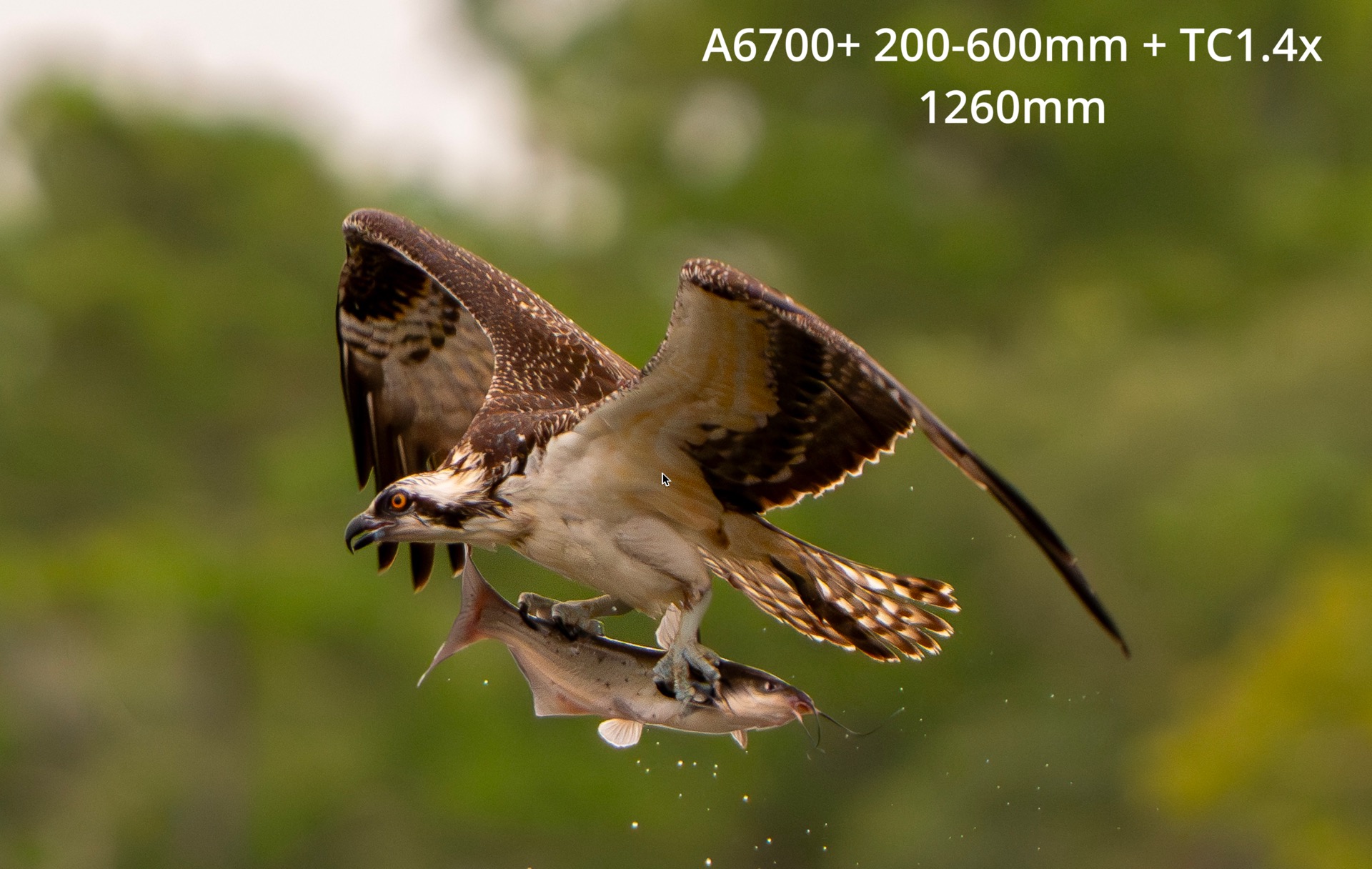 Sony 200-600mm Focus Tracking
In low-light conditions where the contrast is very low, you can experience slowing down compared to faster aperture lenses, and switching the focus from the nearest subject to further objects may cause some hesitation. By the way, the focusing is totally silent and doesn't create any noise or vibrations, which is great for video.
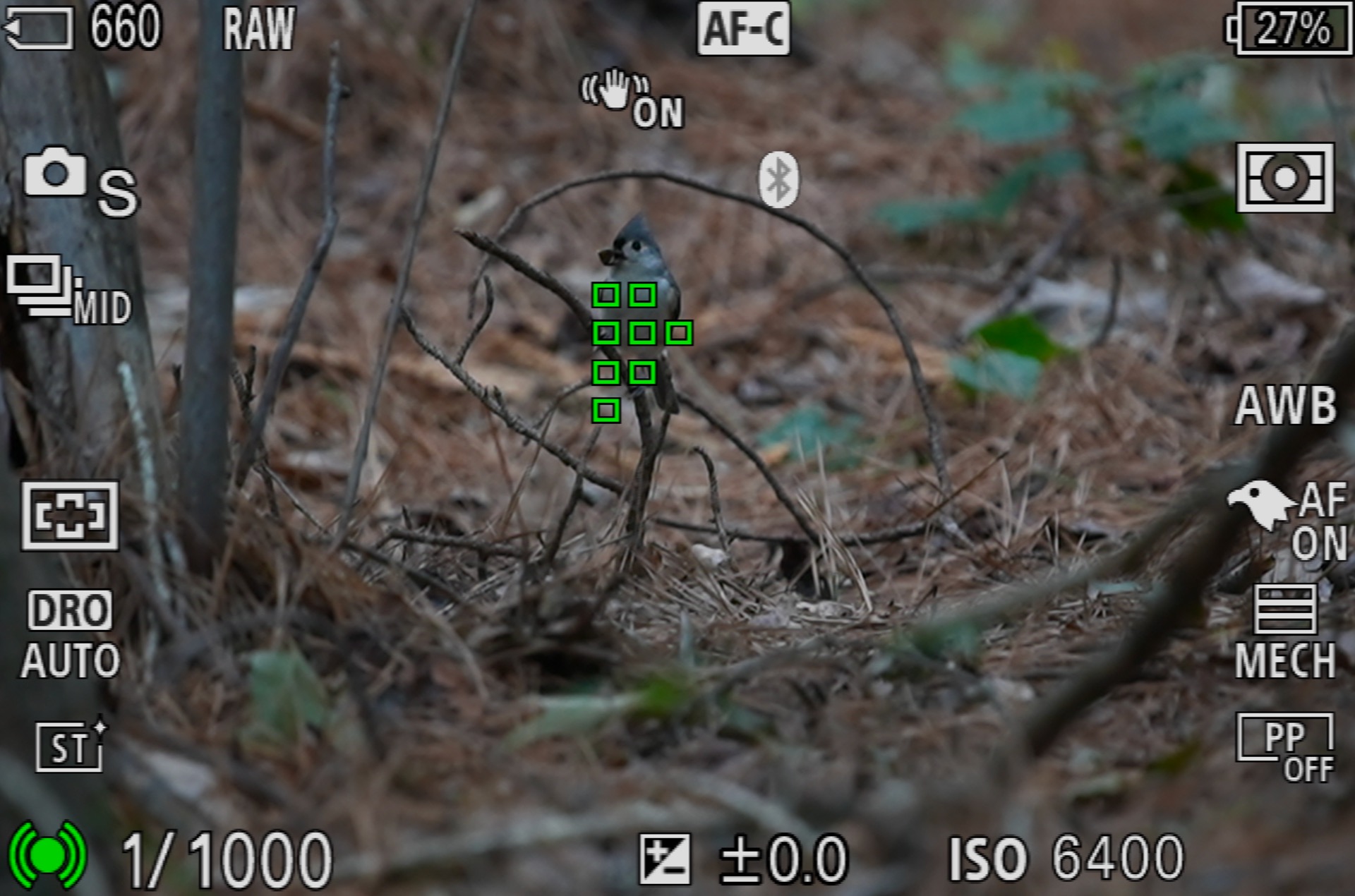 Sony 200-600mm Focusing Under lowlight
Min Focusing Distance and Max Magnification
Minimum focusing distance of the 200-600 is 2.4 meters or approximately 7.9 feet in imperial units. This is definitely not the best in its class and sometimes can cause you to miss a shot or two. As expectedly, it has a relatively low max magnification of 0.20x, which is also not very exciting to be honest. But I still like to use this lens to shoot larger insects and butterflies from a distance without a scare in them.
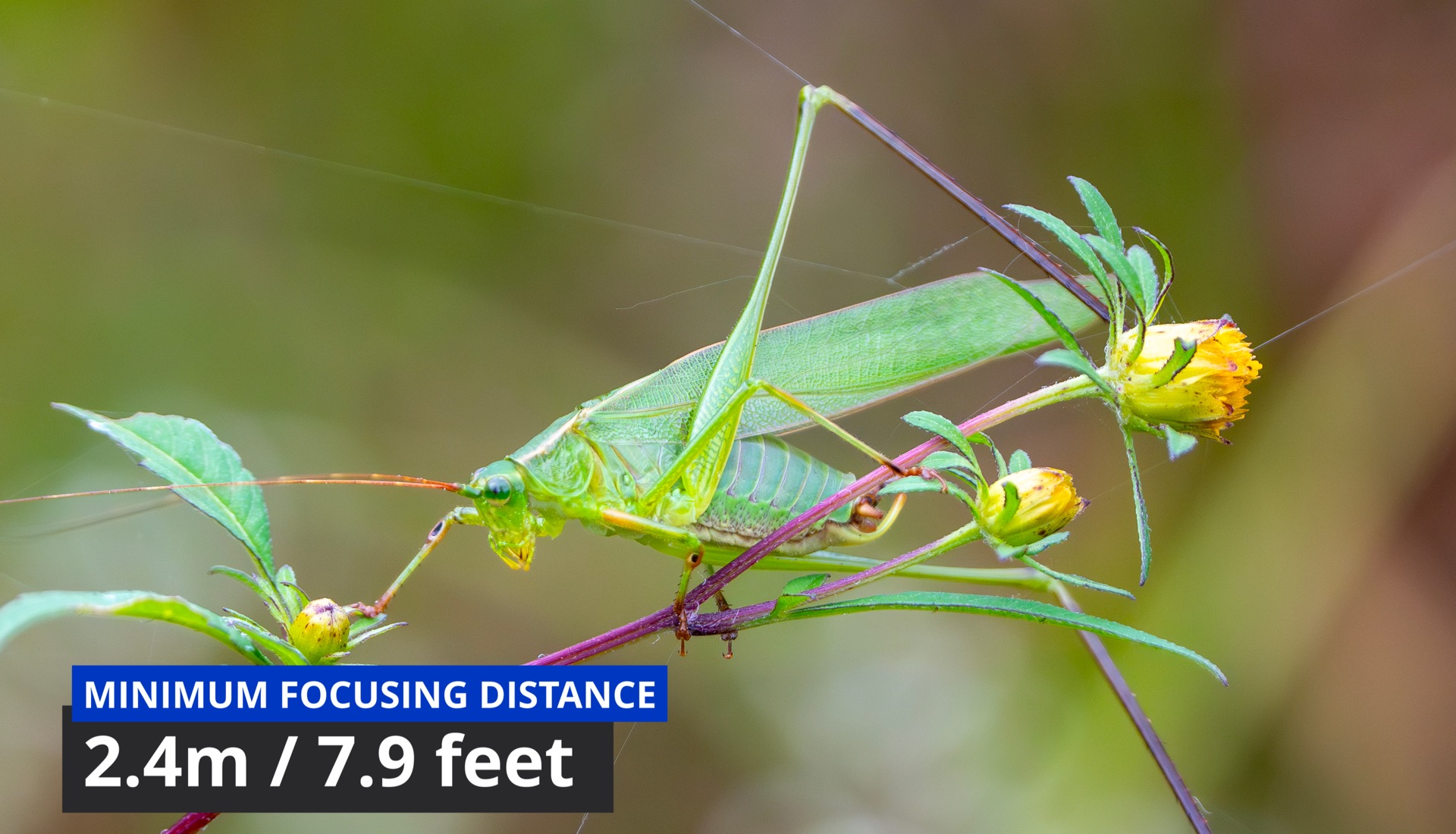 Sony 200-600mm Close Focusing
 Sony 200-600mm Max Magnification
The lens performs well when shooting wide open at f6.3 at 600mm at its minimum focusing distance, although the sharpness and contrast slightly increases at f8. Things don't improve much at higher aperture values, though.
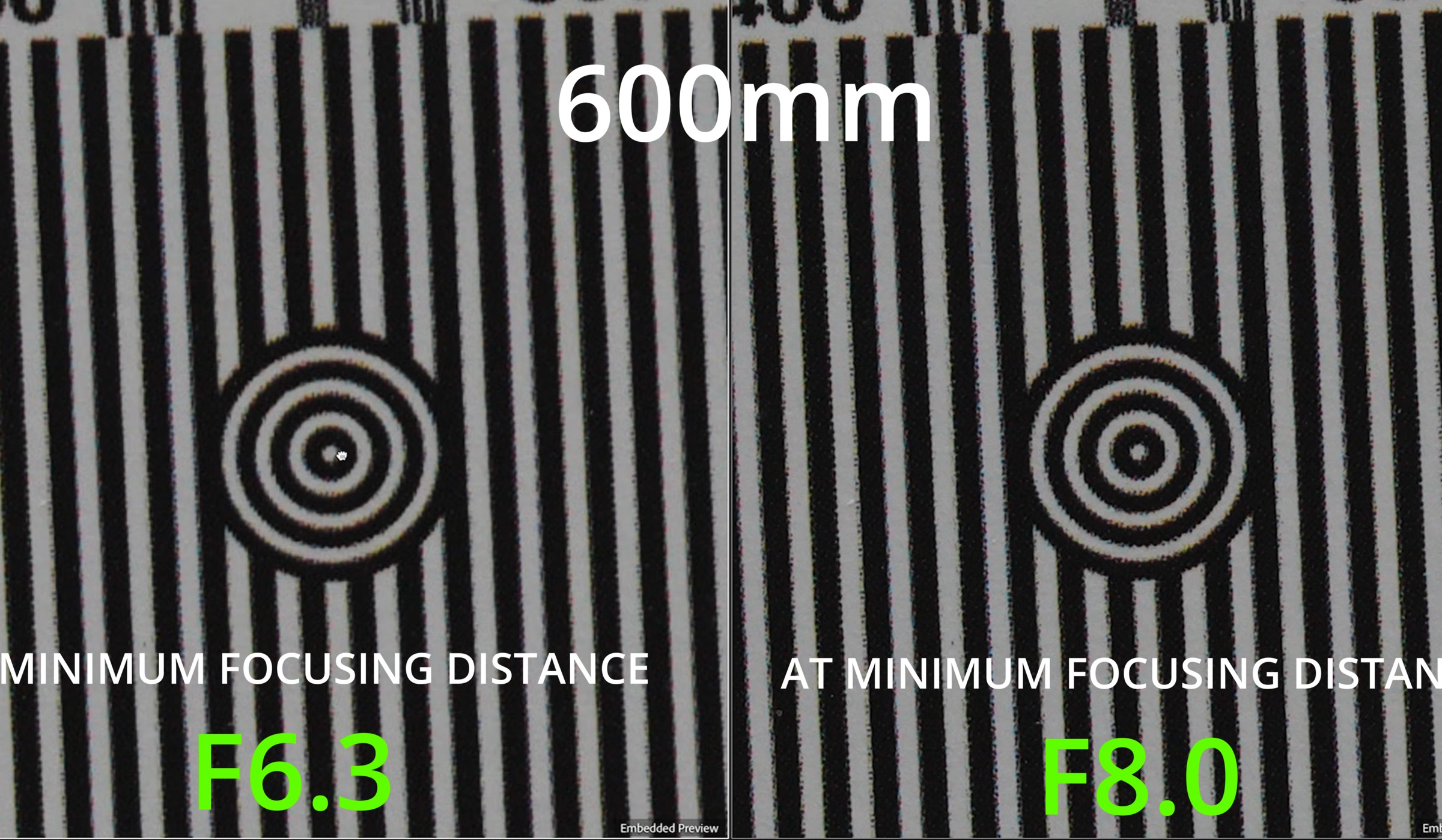 Sharpness at F5.6 vs F8.0 at mimimum Focusing Distance
Optical Performance
Sony's optical formula consists of 24 elements in 17 groups. Out of these 24 elements, one is an s-fherical element and 5R-ED elements. Nano-AR coating does a good job of reducing the flare and ghosting. And fluorine coating repels water and makes it easier to wipe off the contaminants on the front lens surface.
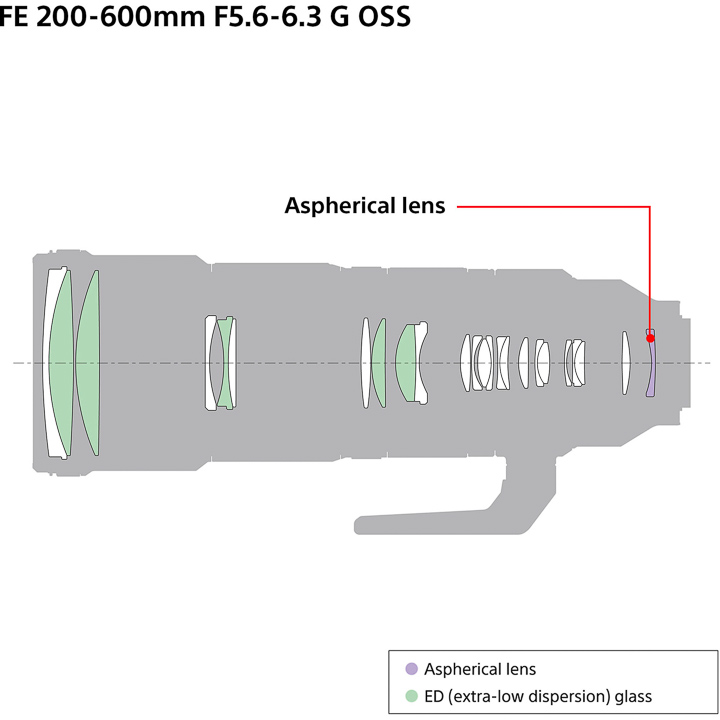 Sony 200-600mm Optical formula
Image quality is where this lens shines the most in my opinion. Users of these lenses will shoot at 600mm the most without a doubt. And the image quality at this focal length, even wide open at f6.3 is excellent. Indeed, it doesn't improve much when stopped down to f8, so you can shoot wide open with peace of mind when needed.
Sharpness at F5.6 vs F8.0 at 600mm
Distortion and vignetting aren't an issue for this lens. In fact, these are not an issue with most modern lenses and camera combinations, as they are effectively corrected via software. Chromatic aberrations are also well controlled, with next to no visible collar fringing in backlit scenes or out of focus areas.
 Sony 200-600mm Image Quality
The lens has a rounded 11 blade IR frame, which helps to provide a pleasing and creamy bokeh, compared to comparable lenses with less number of blades.
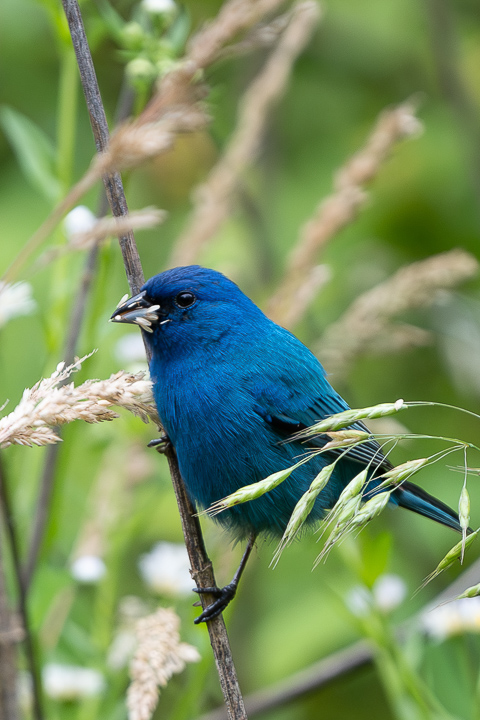 Sony 200-600mm Image Quality 2
However, bokeh quality is not as good as fast telephoto prime lenses, which is expected due to its slow aperture. The background can get busy at times. For best bokeh performance, try to leave distance between the subject and the background, avoid busy backgrounds and shoot at the widest aperture possible.
 Sony 200-600mm Image Quality 3
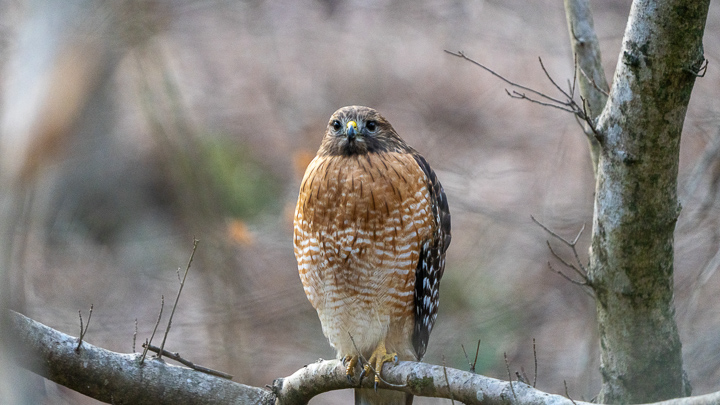 Sony 200-600mm Image Quality 4
Conclusion
In summary, Sony 200-600mm is an excellent super telephoto zoom lens, with great image quality, robust build, fast and accurate AF system and a very attractive price point. Its main downsides are its size and weight, but if you can live with that, it's an exceptional lens for wildlife, sports and any other application where you need a long reach. So, it is an easy 'HIGHLY RECOMMENDED!'.
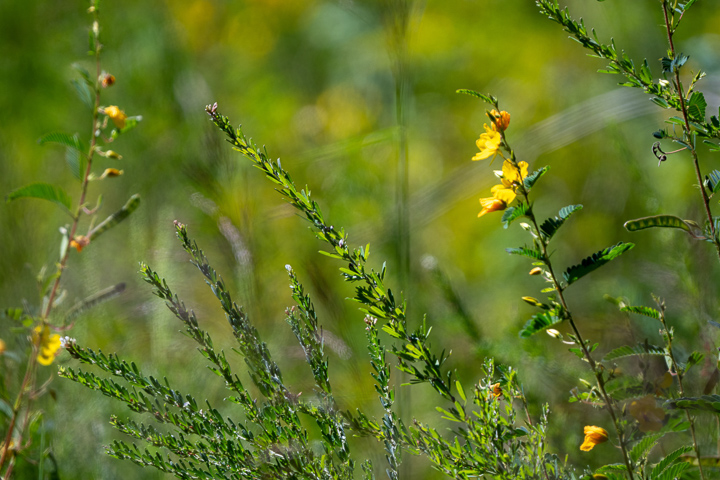 Sony 200-600mm Image Quality 5
 Sony 200-600mm Image Quality 6
The cameras that I used for reviewing the Sony FE 200-600 F5.6-6.3 G OSS are:
